
Used jute bags are not one uniform product. A buyer may see the same broad name applied to thin agricultural sacks, heavier purple- or green-striped bags, repaired bags for domestic use, or selected export lots compressed into bales. The right choice depends on what the bag will hold, how it will be handled, and whether appearance, weight, breathability or load resistance matters most.
For bulk purchasing, the most useful approach is to compare measurable specifications instead of buying by color or a generic grade name. Dimensions, average bag weight, weave condition, seam quality, previous use, moisture, odor and repair history all affect the value of a lot.
What Counts as a Used Jute Bag?
A used jute bag is a woven jute sack that has already completed at least one packing or transport cycle but still has enough service life for another application. Some lots are opened, shaken out and bundled. Others are sorted more carefully by condition, stripe type, thickness or intended use.
Used does not automatically mean damaged. A good commercial lot may contain bags that remain structurally sound, with only normal fiber wear. At the same time, buyers should expect more variation than with newly manufactured sacks.
Common Sizes and Weight Ranges
There is no single international size for all used jute bags. Real market listings from Vietnam show several formats in regular trade. Examples include approximately 110 × 70 cm bags weighing around 0.86–0.89 kg, heavier 110 × 74 cm sacks around 1.1 kg, and thinner 106 × 72 cm bags around 0.6 kg. Export shipment records also show sizes such as 68 × 112 cm, 70 × 110 cm, 80 × 110 cm and 100 × 80 cm.
These figures should be treated as examples, not universal specifications. Used sacks can shrink slightly after washing, repair or repeated use, and different suppliers may measure bags differently.
Measurements Worth Confirming Before Ordering
- Flat width and length in centimeters or inches.
- Average empty weight per bag.
- Approximate weave density or thickness.
- Bottom and side seam construction.
- Stripe color or identification markings if relevant.
- Whether dimensions are measured before or after repair.
- Expected tolerance within one bale or shipment.
How Used Jute Bags Are Commonly Graded
Terms such as “70% condition,” “selected,” “good used,” “thick,” or “export grade” are common in the market, but they are not standardized technical grades. Two suppliers may use the same phrase for noticeably different material.
Instead of relying only on a grade label, ask what defects are allowed. A practical specification can state whether repaired seams are accepted, whether pinholes are permitted, whether stained bags are excluded, and how many bags are inspected per bale.
Key Condition Checks
- Fabric: look for thinning, broken yarns and weak areas caused by abrasion.
- Seams: check side and bottom stitching for opening, loose thread or previous repairs.
- Edges: inspect fraying around the mouth and corners.
- Odor: reject bags with chemical, petroleum, mold or strong product residue odors for sensitive applications.
- Moisture: bags should be dry before baling and storage.
- Contamination: inspect for oil, fertilizer residue, pests, mold or unknown powder.
- Consistency: confirm that the sample shown represents the actual bulk lot.
Where Used Jute Bags Are Practical
Common uses include packing agricultural products, drying-yard work, temporary storage, construction covering, sand filling, landscaping and other jobs where a breathable natural-fiber sack is useful. Some export buyers also purchase selected used sacks in compressed bales for redistribution or agricultural packing.
However, the previous contents matter. A bag that is acceptable for sand or construction may not be appropriate for coffee, cocoa or another odor-sensitive commodity. Application should determine the inspection standard.
Buying in Bales: What to Ask the Supplier
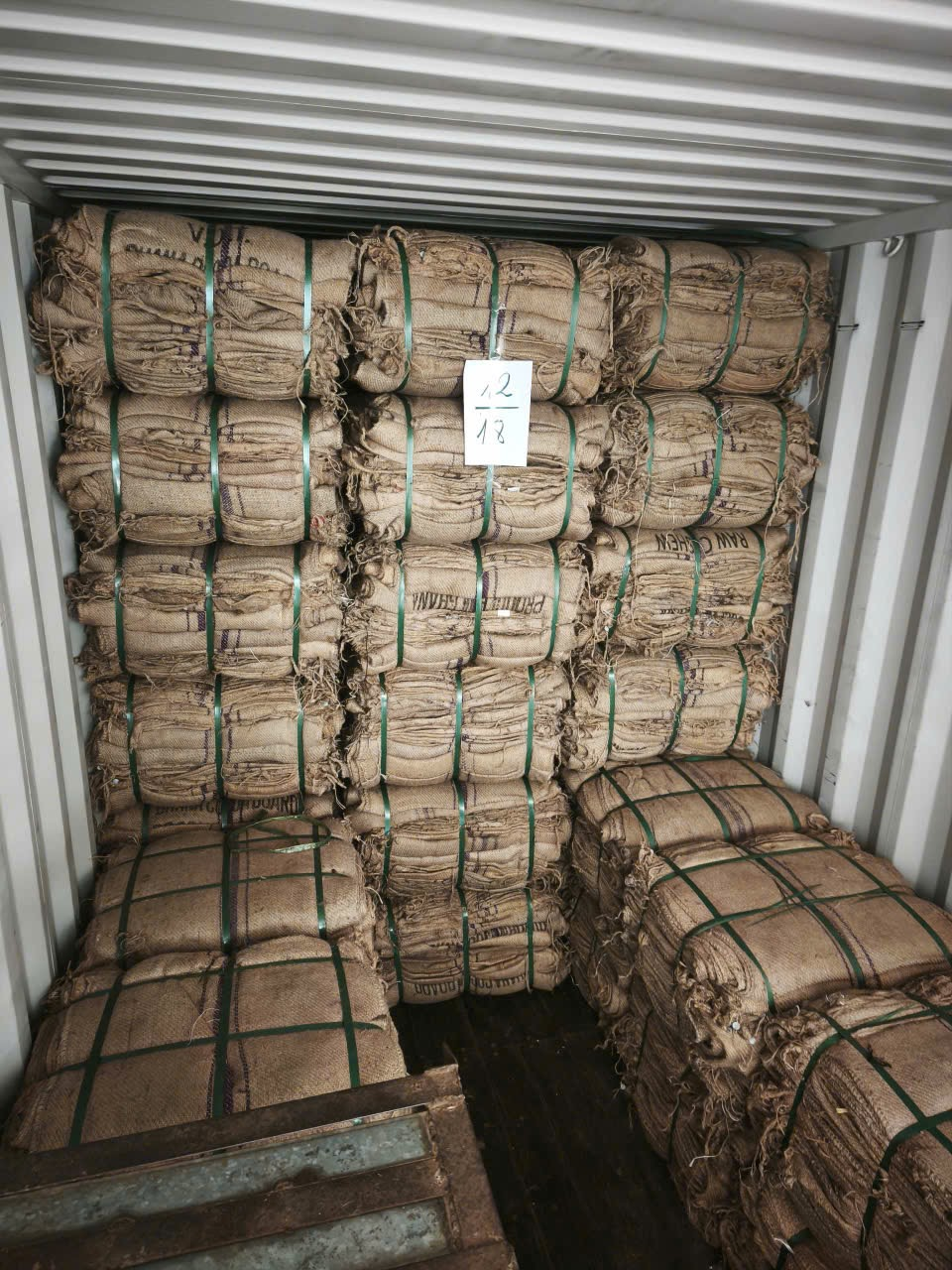
Bulk jute bags are often bundled or hydraulically compressed to reduce shipping volume. Before agreeing to a quantity, ask how many bags are packed per bundle or bale and whether the count is guaranteed. The number of bags that fit into a 40HC container can vary substantially with bag thickness, moisture content, folding method and compression pressure.
A supplier may provide a container-loading estimate, but the buyer should also ask for bale dimensions, net or gross weight, number of pieces per bale and loading photos from the actual lot.
A Practical Buying Checklist
- Confirm intended use first.
- Specify width, length and acceptable tolerance.
- Request average weight per bag.
- State whether repaired bags are acceptable.
- Define unacceptable stains, odors and contamination.
- Ask for close-up photos of seams, corners and fabric.
- Confirm pieces per bale and bale weight.
- Check whether sample quality matches shipment quality.
- For export orders, confirm container loading method and documentation requirements.
When a New Bag May Be the Better Choice
Used sacks work well when cost, reuse and availability are more important than exact uniformity. New bags may be more appropriate when a buyer needs controlled food-contact specifications, custom printing, very consistent dimensions, certified treatment, or a guaranteed strength standard.
The main buying mistake is treating every used jute bag as interchangeable. A small amount of specification work before ordering can prevent mismatched sizes, unexpected repair levels and unsuitable previous-use residue.



Xem thêm
Đặc Điểm Về Bao Bố Cũ Đựng Nông Sản
Concrete Curing Blankets: Benefits and Application Methods
Reusing Burlap Coffee Sacks in Gardening and Landscaping: Practical Uses and Safety Checks
Buying Used Jute Bags in Bulk: How to Calculate Bales, Container Quantities and Inspection Samples
Jute Sandbags for Flood Control: Size, Filling, Placement and Material Checks
Used Jute Bags for Raw Cashew Nuts: How to Choose 80–85 kg Packing
Thin vs Thick Used Jute Bags: How to Match Bag Weight to the Job
Purple-Striped vs Green-Striped Used Jute Bags: Size, Weight and Best Uses