
Purple-striped and green-striped used jute bags are common commercial descriptions in the Vietnamese used-sack market. The stripe color is useful for identification, but it should not be treated as a complete quality grade. Two bags with different stripes can also differ in width, tare weight, weave density, previous use and remaining service life.
For a buyer comparing bulk lots, the practical question is not simply “purple or green?” It is which specification matches the load, handling method and destination requirements. Real market examples show that purple-striped and green-striped bags are often sold as different heavy-duty formats, while lighter thin-woven bags form another class.
Typical Market Specifications
Specifications vary by supplier and lot, but current Vietnamese listings provide useful reference points:
- Purple-striped thick used jute bag: around 110 × 70 cm and approximately 0.86–0.89 kg per bag.
- Green-striped thick used jute bag: around 110 × 74 cm and approximately 1.1 kg per bag.
- Thin woven used jute bag: around 106 × 72 cm and approximately 0.6 kg per bag.
These figures are examples, not universal standards. A buyer should confirm the actual measurements and average tare weight of the lot being offered.
What the Difference Means in Practice
Bag width and usable volume
A green-striped bag listed at 110 × 74 cm is slightly wider than a 110 × 70 cm purple-striped bag. That extra width can matter when packing bulky agricultural products or when operators need easier filling at the mouth. It does not automatically mean the bag should carry a heavier load; load suitability also depends on the weave, seams and condition of the fibers.
Tare weight and fabric build
Bag weight is one of the most useful indicators when comparing lots. A 1.1 kg sack generally contains more material than a 0.6 kg thin-woven sack of similar dimensions. However, tare weight should be evaluated together with condition. A heavy bag with weakened seams or localized fiber damage may be less reliable than a slightly lighter bag in better condition.
Previous use and cleanliness
Used jute bags may have carried coffee, cocoa, cashew nuts, grains or other commodities. For food or agricultural packing, buyers should ask what the bags previously contained, whether they have unusual odors, whether they are dry, and whether staining or residues are acceptable for the intended use.
Which Type Is Better for Agricultural Packing?
For products such as raw cashew nuts, coffee, cocoa, rice, peanuts or potatoes, a buyer normally needs enough strength for filling, stacking and transport while retaining the breathable characteristics of woven jute. Thick purple- or green-striped bags can be attractive where repeated handling and bulk stacking are expected.
A thin bag can still be appropriate for lighter duty, covering, wrapping or uses where low tare weight and lower material cost matter more than maximum robustness.
How to Compare Two Lots Before Ordering
Ask the supplier for a representative sample from the same production or sorting lot that will be shipped. Then check:
- flat dimensions measured without stretching;
- average bag weight from a sample of several pieces;
- number and location of repairs;
- holes, tears and seam opening;
- fraying around the mouth;
- odor, dampness and visible residue;
- stripe consistency if stripe color is important for sorting;
- percentage of bags that meet the agreed condition grade.
For a large order, one visually perfect bag is not enough. The key is consistency across the bale or container.
Export Packing Can Differ by Bag Type
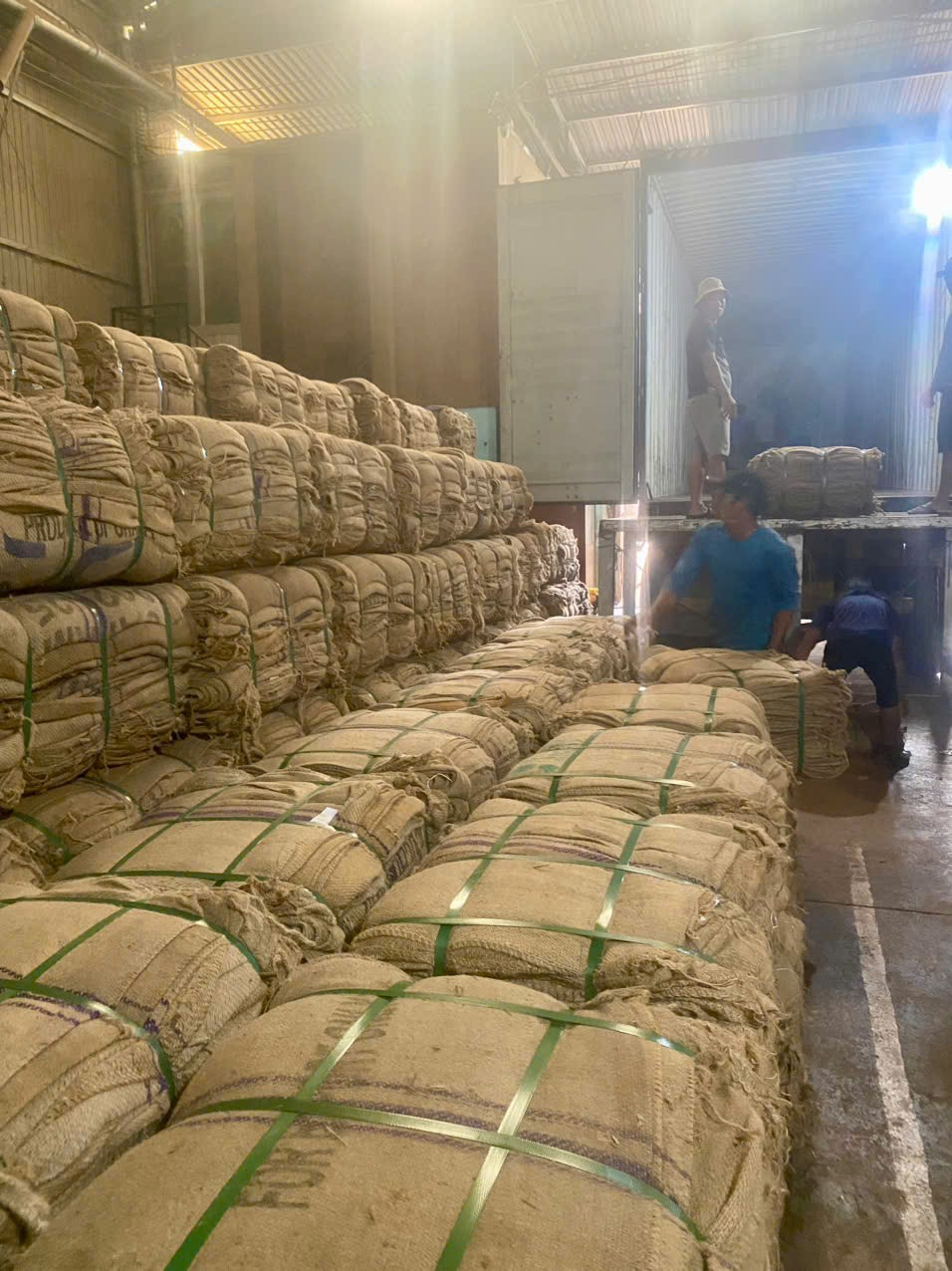
Used-bag exporters commonly compress sacks into bales to improve container utilization. One Vietnamese supplier lists a purple-striped 110 × 70 cm format packed at 100 bags per compressed bundle, while a green-striped 110 × 74 cm format is also listed at 100 bags per bundle. The quoted 40HC loading quantities differ because the bags themselves differ in weight and compression behavior.
This is why buyers should not copy a container quantity from another supplier and assume it will apply to their order. Ask for pieces per bale, bale weight, bale dimensions and the expected number of bales per container.
When Purple-Striped Bags Make Sense
Purple-striped thick bags are a practical choice when the offered lot has good seam condition, the 110 × 70 cm format fits the commodity, and the buyer wants a commonly traded used agricultural sack with substantial fabric weight.
When Green-Striped Bags Make Sense
Green-striped thick bags can suit buyers who prefer a slightly wider format or a heavier sack. The heavier tare weight may be useful where rugged handling is expected, but buyers still need to confirm that the extra weight corresponds to sound fabric rather than moisture or contamination.
Do Not Buy by Stripe Color Alone
Stripe color is convenient for identification, but it is not a substitute for a written specification. A good purchase order should state size tolerance, average tare weight, acceptable repair level, maximum holes or tears, moisture condition, previous-use restrictions and bale packing.
If two lots are both described as “used jute bags,” the better value is the one that matches the actual application with the least unacceptable variation—not simply the one with the preferred stripe.



Xem thêm
Đặc Điểm Về Bao Bố Cũ Đựng Nông Sản
Concrete Curing Blankets: Benefits and Application Methods
Reusing Burlap Coffee Sacks in Gardening and Landscaping: Practical Uses and Safety Checks
Buying Used Jute Bags in Bulk: How to Calculate Bales, Container Quantities and Inspection Samples
Jute Sandbags for Flood Control: Size, Filling, Placement and Material Checks
Used Jute Bags for Raw Cashew Nuts: How to Choose 80–85 kg Packing
Thin vs Thick Used Jute Bags: How to Match Bag Weight to the Job
Purple-Striped vs Green-Striped Used Jute Bags: Size, Weight and Best Uses