
Buying a few hundred used jute bags is mainly a product-selection task. Buying tens of thousands is also a logistics and quality-control task. The buyer needs to translate required pieces into bales, confirm what each bale contains, understand how the supplier calculates container capacity and define how the lot will be inspected.
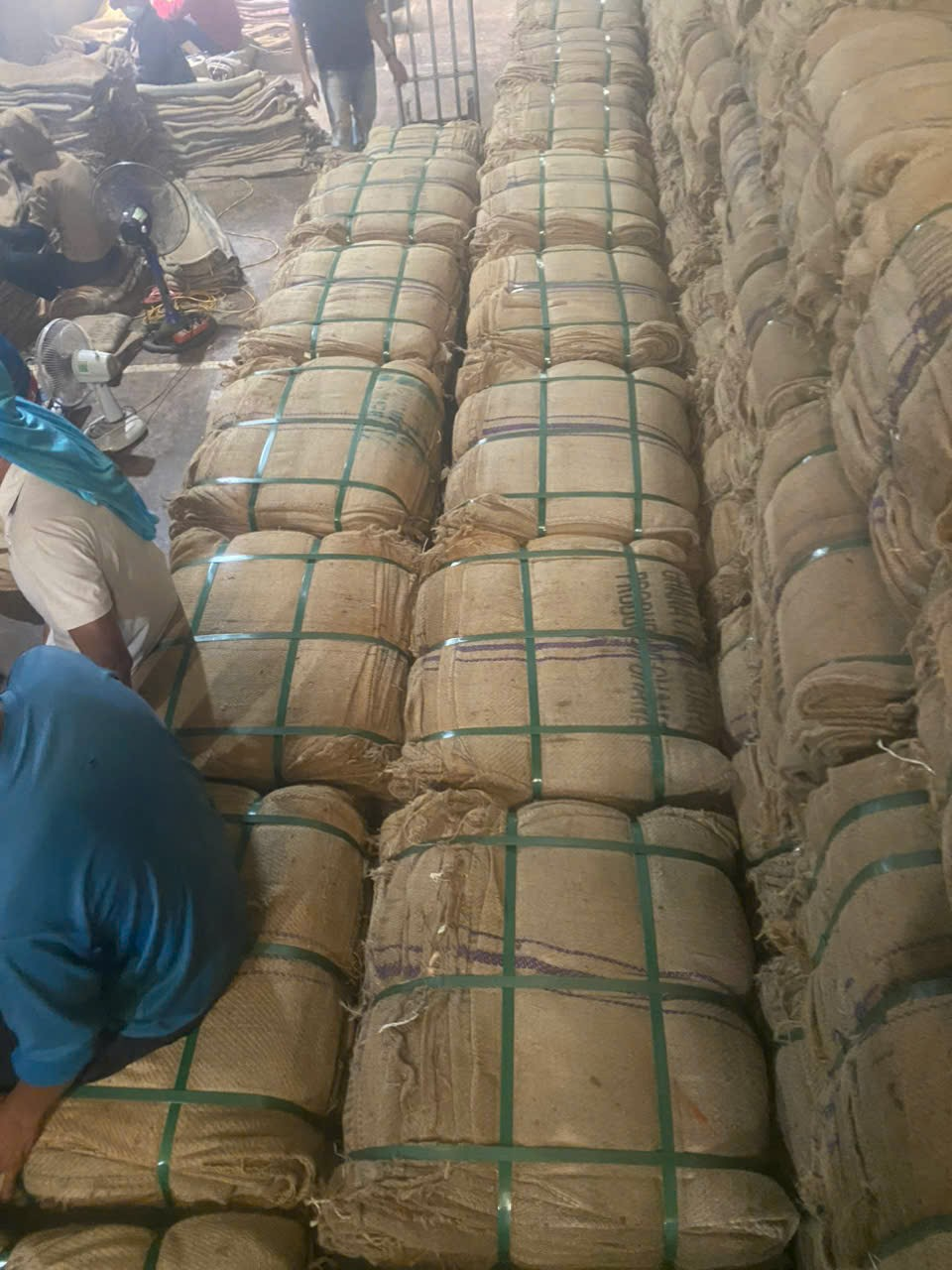
There is no universal number of used jute bags per bale or per container. Actual quantities vary with bag size, bag weight, compression method, bale dimensions and the supplier’s packing equipment.
Start With the Number of Usable Bags You Need
Define the requirement in usable pieces, not only in bales. If a production line needs 20,000 acceptable bags, the purchase order should state 20,000 pieces that meet the agreed specification.
A bale count by itself is incomplete because different products can contain different pieces per bale.
Market Examples Show Why Bale Counts Vary
Used-bag exporters in Vietnam publish examples such as:
- 100 purple-striped thick bags per compressed bundle;
- 100 green-striped thick bags per compressed bundle;
- about 130 thin woven bags per compressed bundle.
New jute-sack suppliers in the wider international market may quote 300 or 400 bags per iron-bound bale for other constructions. Those numbers are not directly interchangeable with compressed used-bag bales.
Basic Bale Calculation
If your supplier confirms a fixed packing quantity, the first calculation is simple:
Required bales = required pieces ÷ pieces per bale
For example, 25,000 pieces packed at 100 pieces per bale require 250 bales before adding any commercial tolerance or spare quantity.
If the contract permits a percentage tolerance, write that tolerance explicitly. Do not leave the final piece count to assumption.
Container Capacity Is Product-Specific
Published market examples illustrate the range. One Vietnamese exporter lists around 32,000 pieces of a 110 × 70 cm purple-striped bag in a 40HC container, about 30,000 pieces of a heavier 110 × 74 cm green-striped bag, and around 38,740 pieces of a lighter thin-woven format.
Other jute suppliers quote very different container counts for new sacks because their bale construction and bag specifications differ.
Use these figures only as references. Your shipping plan should use the supplier’s current loading specification for the exact lot being purchased.
Ask for Bale Dimensions and Gross Weight
Pieces per bale tells you the count but not the storage footprint. Request:
- bale length, width and height;
- net weight of bags in the bale;
- gross bale weight including straps or wrapping;
- pieces per bale;
- number of bales per container;
- container type;
- loading photos or a packing diagram for large orders.
This information is useful for warehouse planning, unloading equipment and checking the shipping documents.
Define an Inspection Sample Before Shipment
Used products naturally have more variation than new manufactured sacks. The purchase specification should explain how many bags will be checked and what counts as a defect.
A practical inspection can include random pieces from multiple bales rather than opening only the easiest bale near the container door.
Possible inspection fields
- dimensions;
- tare weight;
- holes and tears;
- repairs;
- seam integrity;
- moisture or dampness;
- odor and residue;
- stripe or bag type;
- count per bale.
Do Not Mix Grades Without a Written Rule
A mixed shipment can create operational problems even when the total piece count is correct. Thin bags, thick bags, repaired bags and intact export-grade bags should be separated if the buyer has different uses for them.
When mixed grades are intentional, identify each bale clearly and state the quantity of each grade on the packing list.
Allow for Operational Spare Quantity
Some buyers order a small additional quantity because a few bags may be rejected during final filling or damaged during handling. The correct spare percentage depends on the agreed condition grade and the buyer’s process.
Do not hide this inside an undefined “approximately” quantity. Decide whether spare pieces are included in the supplier’s contractual count or ordered separately.
Check Loading and Unloading Conditions
Highly compressed bales can be heavy and awkward. Confirm how the container will be unloaded and whether the destination has forklifts, pallet jacks, labor or sufficient floor space. If bales are not palletized, plan how they will be moved safely from the container.
A Better Bulk Purchase Order
A strong bulk order includes product specification and logistics specification in the same document. State the bag type, size, target weight, condition, acceptable repair level, quantity, pieces per bale, bale labeling, container type, inspection method and required shipping documents.
This reduces disputes because both sides know whether the order is being measured by nominal bales or by actual acceptable pieces.



Xem thêm
Đặc Điểm Về Bao Bố Cũ Đựng Nông Sản
Concrete Curing Blankets: Benefits and Application Methods
Reusing Burlap Coffee Sacks in Gardening and Landscaping: Practical Uses and Safety Checks
Buying Used Jute Bags in Bulk: How to Calculate Bales, Container Quantities and Inspection Samples
Jute Sandbags for Flood Control: Size, Filling, Placement and Material Checks
Thin vs Thick Used Jute Bags: How to Match Bag Weight to the Job
Used Jute Bags for Raw Cashew Nuts: How to Choose 80–85 kg Packing
Purple-Striped vs Green-Striped Used Jute Bags: Size, Weight and Best Uses