
“Jute,” “burlap,” “hessian” and “gunny” are often mixed together in product listings. That creates confusion for buyers because some words describe the raw material, while others describe fabric or sack styles, and regional terminology changes from one market to another.
The simplest rule is this: jute is the natural plant fiber. Burlap and hessian usually refer to coarse woven cloth made from jute. Gunny is commonly associated with coarse jute sacks or sacking used for rough packaging.
Jute Is the Fiber
Jute is a bast fiber processed into yarn and then woven into fabrics of different weights and constructions. The same fiber family can be used for sacks, hessian cloth, rope, twine, shopping bags and other products.
Therefore, “jute” alone does not tell a buyer the weave, bag size, fabric weight or performance.
Burlap and Hessian Are Mostly Regional Fabric Terms
In North America, “burlap” is the common word for coarse woven jute cloth. In the UK, Europe and many Commonwealth markets, “hessian” is more common. In practical sourcing, both words may describe very similar fabric.
Some suppliers use “hessian” for finer cloth and “burlap” for rougher material, but buyers should not assume that distinction is standardized. Always confirm the actual construction.
Specify the Fabric, Not Just the Name
- Fiber composition.
- Fabric weight or GSM.
- Weave density.
- Width for rolls or dimensions for bags.
- Finish and oil treatment.
- Color or dye.
- Stitching and seam construction.
- Intended end use.
What Does “Gunny” Mean?
Gunny is a traditional trade term for coarse jute fabric or sacks used for agricultural and industrial packaging. A “gunny sack” may be used for grains, coffee, potatoes, nuts, sand or other bulk materials.
In online searches, buyers may use “old gunny sacks,” “used gunny bags,” “jute sacks” and “burlap sacks” for overlapping products. The search terms overlap, but the actual specifications still need to be verified.
Coarse Weave vs Tighter Weave
Weave structure changes how a bag behaves. A more open coarse weave can be breathable and flexible but may allow small particles to escape. A tighter or heavier weave may resist abrasion better and contain smaller products more effectively.
For used bags, wear can enlarge openings in the weave, so inspection is especially important near folds, corners and repaired seams.
Why Fabric Weight Matters
Two bags with the same dimensions can feel completely different if one weighs 0.6 kg and another weighs more than 1 kg. Heavier fabric often provides more material and abrasion resistance, but it also increases shipping weight and reduces the number of pieces that can be compressed into a container.
Buyers should therefore ask for average empty bag weight rather than choosing only by color or stripe pattern.
Terminology by Application
For Coffee and Agricultural Packaging
Search terms such as coffee jute bag, burlap coffee sack, hessian sack and gunny bag may all appear. Focus on odor, previous use, bag size, seam strength and cleanliness.
For Construction
Burlap or hessian may refer to absorbent fabric used for concrete curing, erosion control or sandbags. Here, absorbency, contamination and fabric strength are more important than appearance.
For Export and Wholesale
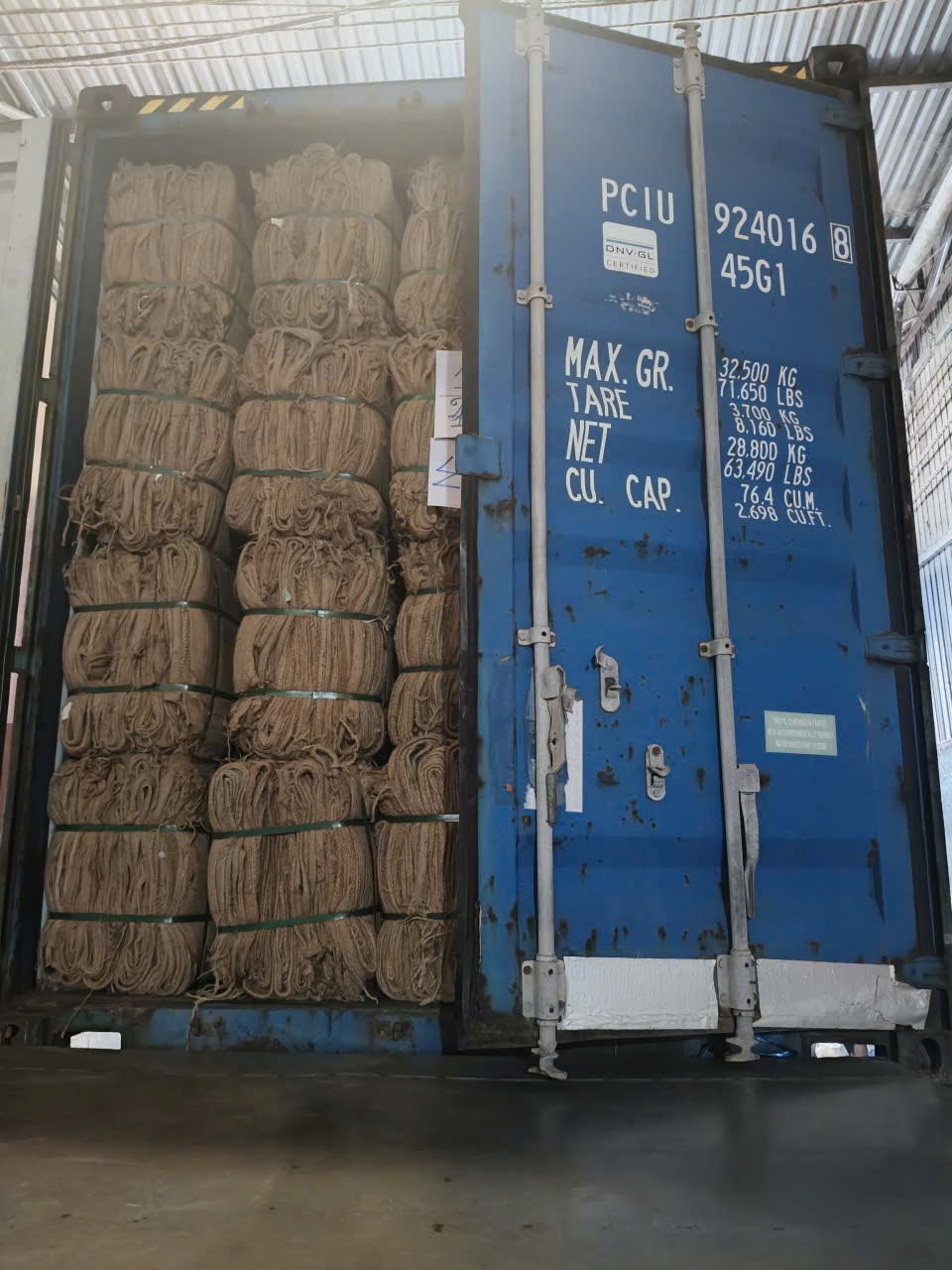
Use a complete description such as “used jute sack, 110 × 70 cm, average 0.88 kg, repaired bags limited, 100 pieces per bale” instead of relying on the word “burlap” or “gunny.”
Common Buying Mistakes
- Assuming hessian and burlap always indicate different materials.
- Ordering “jute bags” without dimensions.
- Ignoring bag weight and weave condition.
- Using a regional name as if it were a technical specification.
- Buying used sacks without asking about previous contents.
- Assuming stripe color automatically defines grade.
A Better Way to Send an Inquiry
A useful inquiry includes the intended use, target bag size, approximate empty weight, acceptable repair level, quantity, bale packing preference and destination. If the product is sensitive to odor or contamination, state that requirement explicitly.
Terminology helps buyers find suppliers, but specifications are what prevent misunderstandings. Whether a market calls the product burlap, hessian, jute or gunny, the measurable details should control the purchase.



Xem thêm
Đặc Điểm Về Bao Bố Cũ Đựng Nông Sản
Concrete Curing Blankets: Benefits and Application Methods
Reusing Burlap Coffee Sacks in Gardening and Landscaping: Practical Uses and Safety Checks
Buying Used Jute Bags in Bulk: How to Calculate Bales, Container Quantities and Inspection Samples
Jute Sandbags for Flood Control: Size, Filling, Placement and Material Checks
Used Jute Bags for Raw Cashew Nuts: How to Choose 80–85 kg Packing
Thin vs Thick Used Jute Bags: How to Match Bag Weight to the Job
Purple-Striped vs Green-Striped Used Jute Bags: Size, Weight and Best Uses